

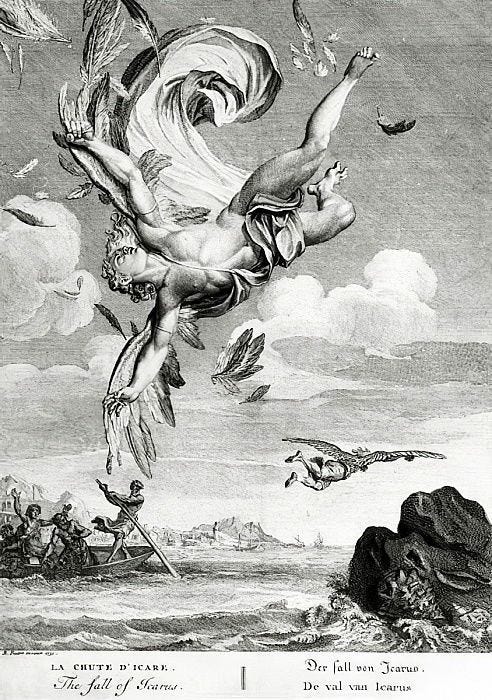
There is a peculiar loneliness to loss. Not the dramatic kind that arrives in a single liquidation or some spectacular blow-up, but the slow death by a thousand cuts. The sort where every morning you wake up believing tomorrow will be different, only to find yourself checking the same position, going through the same synthesis that led you to this place, and desperately attempting to convince yourself that patience is still the best course of action. Somewhere between the delusional conviction and inherent stubbornness, the line quietly disappears, and the loss grows larger before you even realise it.
Last year, I took a loss that still frustrates me to my core; simply thinking about it makes my blood boil. I know I am coming off extremely petty and bitter. Time has passed, markets have moved on and couldn’t care less about what I think, other opportunities have come and gone, yet it remains lodged somewhere in the back of my mind and deeply infuriates me. Not because it was life-ending, nor because I cannot recover financially, but because it challenged something far more valuable than capital or messing up a beautiful PnL streak. It challenged the belief I had in my own judgement, making me chase and operate on emotion; this is the path to death by a thousand cuts.
Losing money hurts; no surprise there. But it isn’t the capital. It is every decision that led me there. The conversations I should have had with myself. The position I definitely should have reduced. The other side I dismissed on the basis of my own bias. The trade I knew was not behaving adequately, yet I somehow found it within myself to convince myself that my line of thinking simply needed more time to manifest. And hey, I paid the price. I deserved it. I was the fish.
Perhaps that is why friends checking in almost feels worse than the loss itself. They mean well, but by the time they ask how you’re doing, you’ve already had the conversation with yourself a hundred times over. At that point, the ego has already absorbed the blow, or maybe it’s still processing it. You begin asking questions that have nothing to do with PnL.
Can I actually do this again?
Was the first outcome skill, luck, or some combination of both? Knowing what it took to build it the first time makes rebuilding feel immeasurably heavier, and the cut grows deeper every time you think about it.
Wins have an extraordinary ability to inflate the ego. You start believing your process is robust enough to survive almost anything (I am aware of how dumb this comes off). Loss has the opposite effect. It strips away certainty with remarkable efficiency. Even observations you were objectively correct about become difficult to trust due to the fact that you failed to act on them and execute them in time. There is something uniquely frustrating about being right in thought but wrong in execution. Hence, a valuable reminder: markets do not reward ideas; they reward action and dispassionate decision-making, even if it means closing the trade and thinking things through.
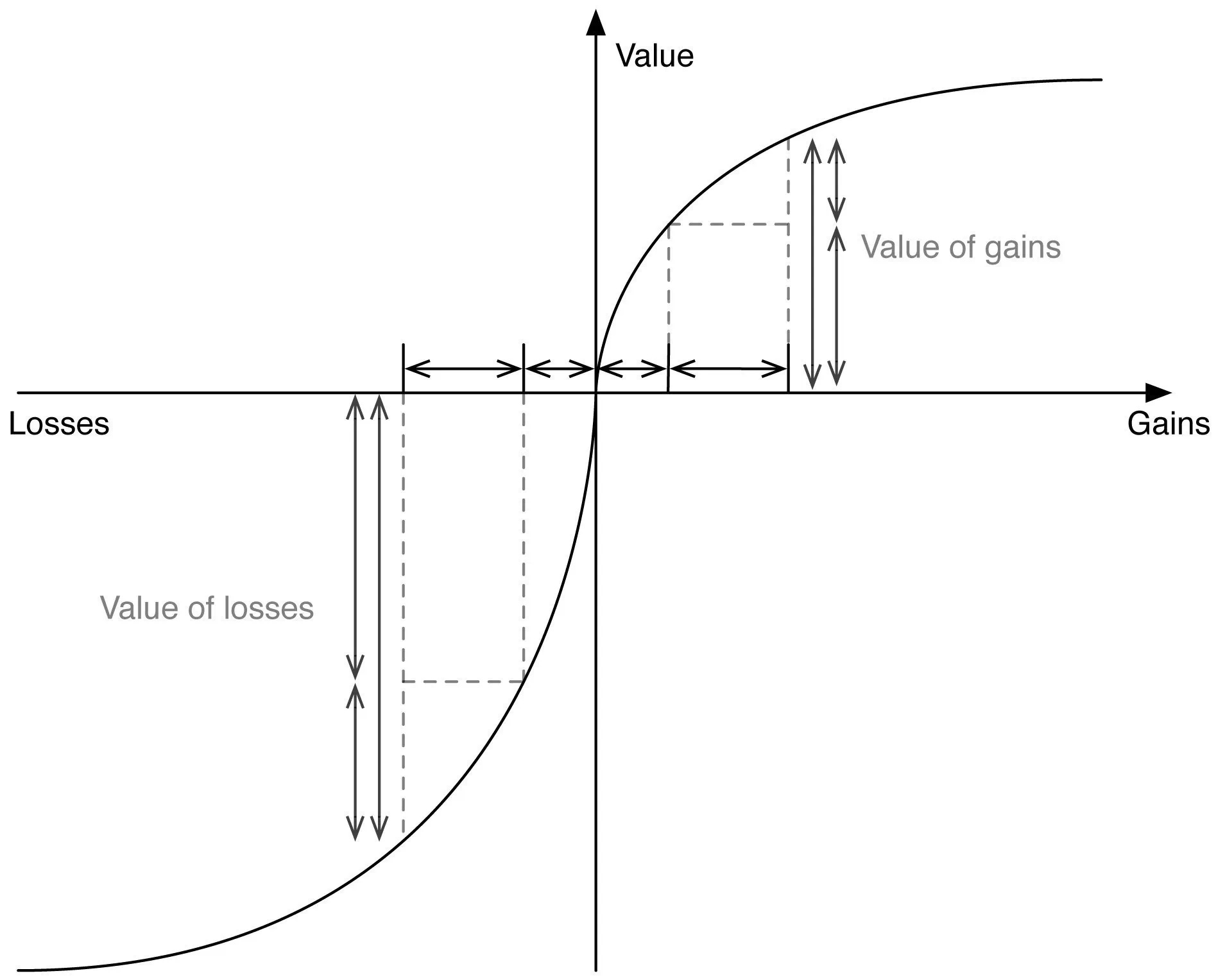
Prospect Theory offers a satisfying explanation. The asymmetry is remarkably intuitive once you experience it. It is simple to understand: we derive far less pleasure from gains than pain from equivalent losses. A winning trade quickly becomes your new baseline, which is a flawed standard to operate on. On the other hand, a losing trade stays with you for months, perhaps years, maybe serving as a memory of what we lost. It is difficult to explain to someone outside markets why one bad trade can outweigh twenty good ones emotionally, but anyone who has experienced it will understand immediately. I suppose this is the final phase of digesting the loss and processing what happened.
The emotional response rarely announces itself all at once. It arrives quietly. Losing trades gets you biting your nails, feeling sick to your stomach, pulling hair, breathing heavily, and slowly turning tilted. You begin trading from reflex and impulse rather than thought and structure. You become increasingly short-sighted, particularly if you remain structurally long-biased in a market perfectly willing to crucify optimism and punish any form of bullish expression. We can argue that each decision feels reasonable in isolation, yet collectively they compound into something much larger.
Looking back, some of the mistakes were blatantly obvious. Others resemble being scared of the monster under the bed. You spend months protecting yourself against unlikely outcomes while quietly ignoring the obvious risks sitting directly in front of you. There is another trap that remains surprisingly difficult to overcome: becoming hesitant to short something because it is already down or thinking you are too late to the party. Logical synthesis tells you it must be cheap, yet it is down for a reason. I might outright butcher the exact expression, but markets have an uncomfortable habit of remaining irrational far longer than one can remain solvent. Lessons in that.
Perhaps these are simply the classic thoughts you succumb to during a bear market, when prices remain generally compressed, and everything feels structurally broken. While I envision the depressed state and more aggressive exit from the space may have been rooted in exhaustion rather than conviction, it is remarkable how permanent temporary conditions can feel. Then, when the tide shifts, suddenly the same market that looked terminal only months earlier begins rewarding risk again.
What remains baffling to me is how reflexive it all is. Objectively, if people don’t care, they don’t care. Then, all of a sudden, they care all at once. These markets remain sanguine until they aren’t. Risk-on gets rewarded while somebody else inevitably plays the role of the sacrificial lamb (I definitely was). Timing this is challenging at best, which perhaps explains why so many participants convince themselves that conviction alone is enough, or even worse, they position themselves based on borrowed conviction.
Meanwhile, mouth breathers get rich and pontificate about trading and markets. There are a lot of fools peacocking these days. The old quote that “the main purpose of the stock market is to make fools of as many men as possible” feels increasingly relevant time and time again. Success and randomness often become indistinguishable over short periods. Heuristics become difficult to justify. If I were a gambling man, I would probably bet, and that’s precisely the problem.
The biggest lesson wasn’t about that specific trade. It was understanding the cost of tuition. You can’t be spending millions of dollars on lessons you could have learned before the trade. That’s outright stupid. There comes a point where self-punishment stops being productive and simply becomes another position you refuse to close, but in most cases it’s better to peel the plaster off early. The objective is not to forget, or even worse, pretend it never happened. The objective is to ensure you never pay for the same lesson twice.
The loss will sting, but not nearly as much as realising you were the fish. If you are a competitive and somewhat capable market participant, that’s the thought that truly lingers. Money can be earned back. Ego eventually heals, but you become more rational. Confidence slowly returns, even if your armour has a dent in it. But only if you remain emotionally intact throughout the process and don’t turn to self-destruction.
As prices perform well again, I hope to look back at this stream of thoughts in a different light, not as an obituary of my mistakes, but as a reminder of what markets extract from us when we become complacent and succumb to the trap of greed. The goal was never to avoid loss entirely. That is outright impossible; it’s part of the process. The goal is to have enough bullets in the gun to be able to take down the elephant when the time comes. To occasionally lose the battle, but survive to fight another day.
Vidura Niti says that wisdom belongs not to the man who never errs, but to the one who refuses to repeat the same mistake. Markets are unusually generous teachers. They allow us to fail repeatedly, blow up and make emotionally driven choices. They simply charge extraordinary tuition, and you can either deal with the pain or continue chasing and die a slow and painful death of a thousand cuts.
The lessons here are beyond the loss itself. I definitely feel bitter, and it is inherently evident in the tone of my writing. I deem it worth it if I am no longer the fish.